Buying your first rural property in Menifee can feel exciting right up until the questions start piling up. Can you keep animals, add a shop, rely on septic, or count on that long dirt road in bad weather? If you want land without surprises, this guide will help you focus on the details that matter most before you buy. Let’s dive in.
Understand Menifee’s Rural Setup
Menifee’s rural areas are part of the city’s long-standing character. The city describes these areas as agricultural, equestrian, and estate-oriented, with larger lots, more separation from urban uses, and less developed roads and infrastructure.
That matters because rural living in Menifee is not just about getting more space. It often means thinking beyond the house and looking closely at the land, access, utilities, and upkeep that come with it.
The city’s Land Use Element notes that areas south of Garbani Road, east and west of I-215, tend to be more rural in nature. If you are shopping in or near those areas, it is especially important to treat each property as a full-site review, not just a home tour.
Start With Zoning First
Zoning should be your first filter on any Menifee rural property. A large lot may look flexible, but size alone does not guarantee you can use it the way you want.
Menifee includes rural zoning districts such as AG, RM, RR5, RR2, RR1, and RR1/2. Minimum lot sizes can range from 10 acres down to one-half acre, depending on the zone.
The zoning category can also shape what kind of rural lifestyle is realistically supported. RR5 and RR2 are more closely tied to animal keeping and agricultural or equestrian uses, while RR1 encourages limited agriculture and equestrian use. RR1/2 allows limited agriculture and animal keeping, but intensive animal keeping is discouraged.
If you are dreaming about horses, hobby farming, or extra outbuildings, zoning needs to match that plan. This is one of the biggest reasons first-time land buyers benefit from local guidance, especially in a market like Menifee where rural parcels can vary widely from one street to the next.
Know the Utility Setup
One of the most important questions to ask is how the property is served. In Menifee, water and sewer service is operated by Eastern Municipal Water District, but rural properties still need parcel-specific verification.
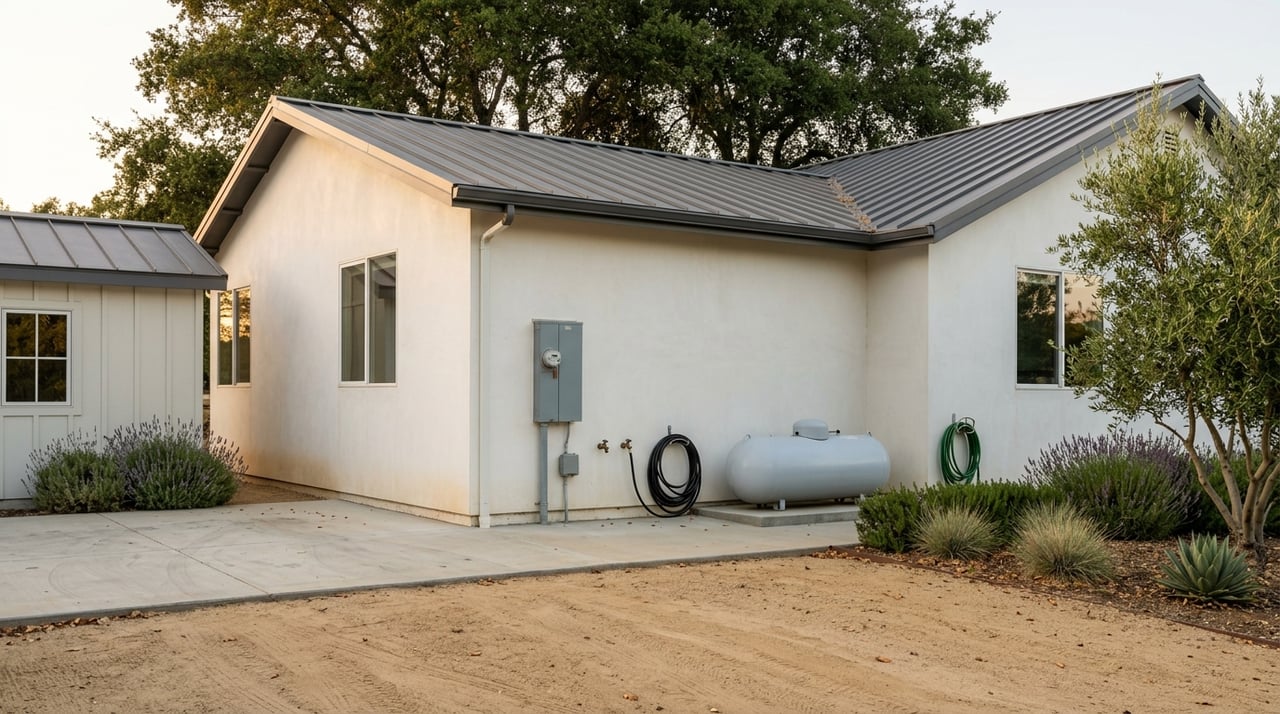
Before you fall in love with a property, confirm whether it is connected to sewer, uses septic, has a well, or relies on a different combination of services. That setup affects both your monthly costs and what future changes may be possible.
If a property has a well, Riverside County Environmental Health requires permits for construction, reconstruction, or destruction of wells. If it has septic, county permits are required there too, and new septic installations also need a building permit and a percolation report.
For first-time land owners, this can be a major shift from typical suburban homeownership. Rural property is often about systems, not just square footage.
Quail Valley Needs Extra Attention
If you are considering property in Quail Valley, pay especially close attention to wastewater service. Menifee notes that subareas 4 and 9 remain under a septic prohibition.
In those areas, new septic tanks are still prohibited, and sewer connection is required before residential development can be permitted. That means buyers should confirm the exact status of the parcel early, especially if the property is vacant land or if future improvements are part of the plan.
Check Access and Road Conditions
A rural property can look perfect online and still come with access issues that affect day-to-day use. Menifee requires every structure to sit on a legally recorded parcel with permanent access to a public or private street, and that access must be safe and convenient for servicing, fire protection, and parking.
That legal access piece matters more than many first-time buyers realize. A long driveway, gate, or private road can change how easily the property functions, especially for deliveries, emergency access, or future improvements.
Menifee also notes that it has many residential dirt roads. Some are city-maintained, some are privately owned and maintained, and some can become impassable during weather events.
If the property sits on a dirt road, ask who maintains it and what the road is like during storms. That question can have a real impact on convenience, safety, and long-term maintenance expectations.
Look Closely at Grading and Drainage
On rural lots, not all acreage is equally usable. Slope, drainage, and grading constraints can reduce the buildable area and affect where you can place driveways, pads, fences, retaining walls, or future structures.
Menifee’s grading code requires erosion-control planning and generally directs stormwater to approved drainage facilities when practical. Cross-lot drainage may be allowed only with approval and drainage easements.
In simple terms, you want to know how water moves across the property before you buy. On larger or hillside parcels, drainage can become a major factor in both cost and design.
Fire Hazard Is Part of Rural Ownership
Fire exposure is an important part of buying rural property in Menifee. The city’s Safety Element explains that fire hazard depends on terrain, vegetation, weather, crown-fire potential, and fire history.
Menifee notes that hillside areas are generally classified as Very High Fire Hazard, while lower-lying urban areas are generally Moderate. The city also explains that hazard zones measure potential hazard, not immediate risk, but the designation still matters to owners and buyers.
If a property is in a Very High Fire Hazard area, owners must maintain 100 feet of defensible space and follow home-hardening and wildland-urban interface requirements. The fire-hazard designation must also be disclosed when selling.
For some new development in local responsibility area Very High Fire Hazard zones, Menifee says a site-specific Fire Protection Plan, a Fuel Modification Plan, and two points of access may be required. If you are buying with plans to build or expand, that is critical to verify early.
Animal Keeping Comes With Rules
Many buyers are drawn to rural Menifee because they want space for animals. That can be a great fit, but animal keeping is still regulated by zoning, lot size, and city code.
Menifee’s animal-keeping rules apply to domestic and farm animals, horse stables, boarding and riding academies, and other related uses. In most cases, animal keeping is considered an accessory use unless the property is in AG zoning.
The city also notes that lots under 20,000 square feet are generally limited to domestic pets, poultry, and rabbits for the occupant’s exclusive use unless the code says otherwise. Animal uses can also be restricted if they create a public nuisance.
This is why first-time land buyers should not assume that a rural-looking lot automatically supports every animal use they have in mind. The better approach is to match your lifestyle goals to the parcel’s actual zoning and standards.
Expect More Ongoing Land Care
Rural ownership usually comes with more upkeep than a typical tract-home purchase. In Menifee, that may include fence maintenance, weed abatement, fire clearance, driveway care, drainage monitoring, and animal-related maintenance if allowed on the property.
For many buyers, that extra responsibility is worth it. You get more space, more flexibility, and a different kind of lifestyle, but it helps to go in with clear expectations.
Questions to Ask on Your First Tour
When you tour a Menifee rural property, bring a practical checklist. These questions can help you spot issues early:
- Is the property on sewer, septic, or a well?
- Are permits or documentation available for the septic system, leach field, or well location?
- Is the road public or private, and who maintains it?
- Does the parcel have permanent legal access?
- Is the driveway wide enough for normal vehicle access and fire access needs?
- Is the property in a fire-hazard, hillside, or wildland-urban interface area?
- Will defensible-space or fire-plan requirements affect future building or planting?
- What animals are allowed based on the property’s zone and lot size?
- Are there drainage easements, cross-lot drainage issues, retaining walls, or grading constraints?
A strong rural purchase is not just about whether the home looks right today. It is about whether the site can support the way you want to live over time.
Why Local Knowledge Matters
First-time land buyers often need more than a standard home search. In Menifee, parcel usability, zoning, access, fire exposure, and utility setup can all shape whether a property is truly a fit.
That is where local experience can make a real difference. Erin Archibek Mills brings deep Menifee Valley roots, years of rural and acreage transaction experience, and a practical understanding of how land use details affect value and lifestyle.
If you are thinking about buying your first rural property in Menifee, Erin Archibek Mills can help you evaluate the full picture so you can move forward with more clarity and confidence.
FAQs
What should first-time land buyers in Menifee check before making an offer?
- Start with zoning, utilities, wastewater service, legal access, road maintenance, grading, drainage, and fire-hazard requirements.
Can you keep horses or farm animals on every rural property in Menifee?
- No. Animal keeping depends on the property’s zoning, lot size, and Menifee’s animal-keeping standards.
Do Menifee rural properties always have sewer service?
- No. Some properties may use septic or well systems, so you should verify the exact setup for each parcel.
Are dirt roads common in Menifee rural areas?
- Yes. Menifee says there are many residential dirt roads, and maintenance responsibility can vary between public and private ownership.
Do fire-hazard rules affect rural property ownership in Menifee?
- Yes. Some areas have defensible-space, home-hardening, disclosure, and possible fire-plan requirements that can affect ownership and future development.