Wondering why some Menifee horse properties attract serious buyers quickly while others sit? In this niche market, it is not enough for a property to look rustic or spacious. Buyers want to know the land is usable, the horse setup makes sense, and the paperwork supports what they see. If you are getting ready to sell, these steps can help you present your Menifee horse property with more clarity, confidence, and value. Let’s dive in.
Start With Zoning and Legal Use
Before you market your property as horse-ready, confirm how the parcel is zoned and whether the current horse use is permitted. Menifee’s animal-keeping rules apply to horse stables, boarding facilities, and riding academies, and the city classifies horses as large animals. The code also ties animal keeping to zoning and lot size standards.
In several noncommercial situations, lots under 20,000 square feet generally cannot keep animals other than domestic pets, poultry, and rabbits, except in the AG zone. That means the first step is not cleaning stalls or ordering photos. It is verifying the parcel’s zoning, permitted use, and any nonconforming status through Menifee’s zoning map and development code.
This matters because buyers will ask direct questions. They want to know how many horses the parcel can support, whether the use is legal, and whether the setup matches local standards. If you can answer those questions early, you reduce uncertainty and build trust.
Why this step matters in Menifee
Menifee’s planning documents describe rural land uses as part of the city’s historic character, including agricultural, equestrian, and estate-oriented uses. The city also identifies equestrian trails as an important community feature to protect and connect. That makes horse-property usability a real selling point, not just a lifestyle detail.
Clean the Land and Working Areas
Once legal use is clear, focus on the way the property functions and feels. Horse buyers do not just look at the house. They study the driveway, gates, paddocks, turnout areas, fencing, trailer access, and whether the whole property feels organized.
Start by removing visual clutter. Unused equipment, old materials, loose debris, and scattered supplies can make even a capable setup look neglected. The goal is to make the working parts of the property look intentional, clean, and easy to understand.
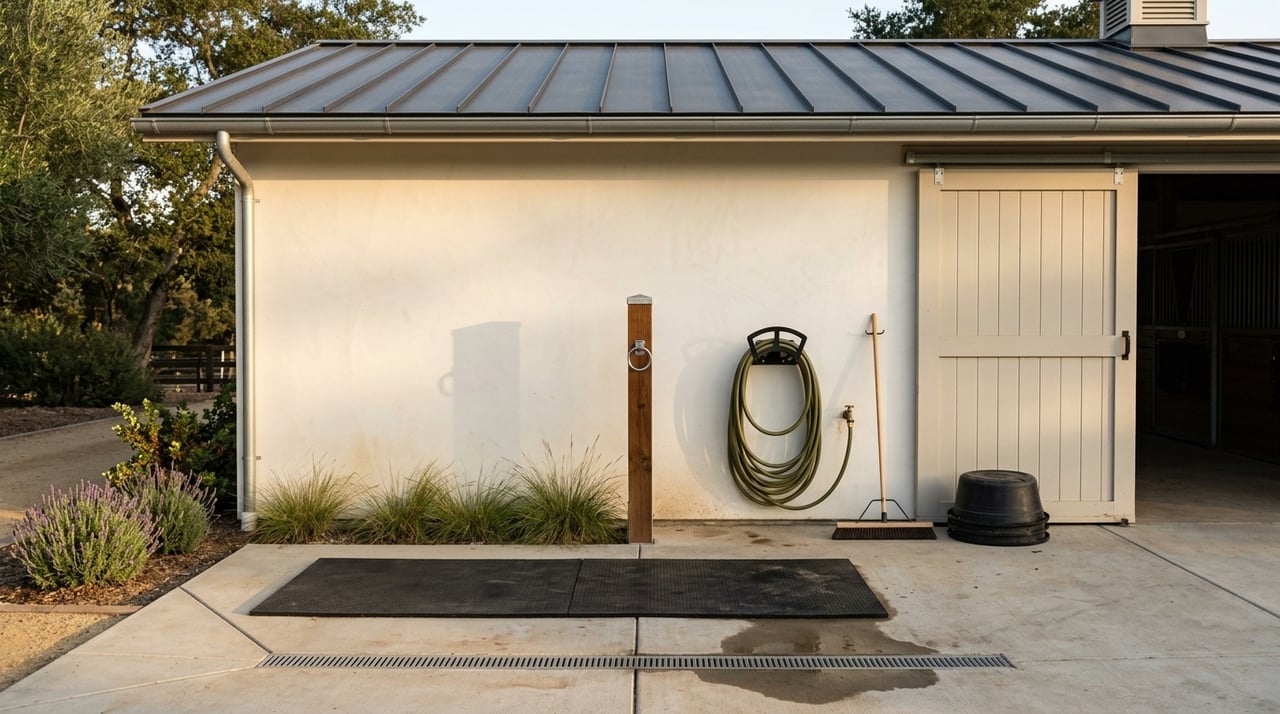
Repair what buyers will notice right away. Straighten fencing, fix sagging gates, clean wash areas, and improve sightlines across paddocks and pens. If a buyer cannot quickly understand how the property works for horses, they may move on before they ever appreciate its strengths.
Focus on practical curb appeal
For a Menifee horse property, curb appeal goes beyond fresh mulch and a swept porch. It includes:
- Clear driveways and entry gates
- Tidy paddocks and turnout areas
- Repaired or tightened fencing
- Organized feed and tack storage
- Clean trailer access and parking areas
- Open views of barns, arenas, and outbuildings
Address Wildfire Readiness
In Menifee, exterior prep should also include wildfire readiness. CAL FIRE says wildfire preparedness depends on both home hardening and defensible space. Its guidance calls for 100 feet of defensible space, or to the property line if that comes first.
CAL FIRE also says annual grass should be cut to a maximum of four inches. Combustible materials should be kept away from the home, with clearance around outbuildings, wood piles, and propane tanks. For horse properties, this often means a more thorough cleanup than sellers first expect.
This work can improve both safety and presentation. A property with trimmed grass, reduced fuel load, and clean space around structures tends to photograph better and show more confidently. It also signals that the land has been cared for with attention to real-world conditions.
Areas to check before photos
Walk the property and look at it the way a buyer will. Pay special attention to:
- Dry grass and weeds near structures
- Combustible clutter around barns and sheds
- Wood piles near the home or outbuildings
- Propane tank clearance
- Brush buildup along fence lines
- Overcrowded storage zones that block access
Gather Permits and Property Records
Horse properties often include multiple structures and site improvements, which means documentation matters. Riverside County Building and Safety says a permit is required before constructing, enlarging, altering, repairing, or demolishing a building or structure. Its parcel records can show permit history going back to about 1963.
Before listing, gather permits and final inspection records for anything a buyer may question. This can include barns, arenas, grading, fences, additions, ADUs, and other structures or improvements. Having these records ready can help prevent delays once a buyer starts due diligence.
You should also verify water and wastewater details. Riverside County Environmental Health oversees installation of water wells and septic systems in the county. The county requires permits for well construction, reconstruction, or destruction, and new septic systems require a building permit plus an OWTS construction application and supporting documentation.
Records worth collecting early
A good seller file may include:
- Permit records for barns and outbuildings
- Final inspection records
- Grading documentation
- Fence or arena paperwork, if applicable
- Well-related records
- Septic-related records
- Contractor invoices and contact information
The more complete your file, the easier it is to answer questions with confidence.
Prepare Disclosures Carefully
California sellers have disclosure responsibilities that matter even more on rural or equestrian properties. The Transfer Disclosure Statement covers the property’s physical condition, along with hazards or defects. The seller’s agent must also visually inspect the property and disclose readily observable defects.
California also requires disclosure of contractor-performed additions, structural modifications, alterations, or repairs made within the prior 18 months when the statute applies. That is why it helps to keep invoices, permits, and contractor details together before your home goes live.
For rural or agricultural-adjacent parcels, the residential disclosure package also includes a Notice of Right to Farm. This warns buyers that they may be limited in seeking remedies against agricultural practices conducted under the law. California law also requires disclosure if a single-family property is located in a very high fire hazard severity zone.
Common buyer questions to expect
If you prepare for these questions in advance, your listing process usually feels smoother:
- Is horse use permitted on this parcel?
- Is the current use legal or nonconforming?
- Were the barn, arena, grading, and other improvements permitted?
- Does the property have a well, septic system, or sewer connection?
- Is the property in a fire hazard severity zone?
- What land features support day-to-day horse use?
Photograph the Property Strategically
The final step is photography, but timing matters. Take photos after the land is cleaned, records are organized, and the horse setup looks functional. A polished photo package should help buyers understand how the property works, not just show that it is pretty.
For Menifee horse properties, buyers often care most about the practical details. That includes arena size and footing, stall count, wash areas, feed or tack storage, trailer access, turnout, fencing condition, and any trail or open-space connection. These features support the equestrian lifestyle Menifee is known for, so they deserve clear visual attention.
Do not let the house overshadow the land if the land is part of the value. A strong listing should tell the full story of the property, from access and layout to horse amenities and usable space. When buyers can quickly picture daily life there, the marketing does its job.
A Simple Five-Step Checklist
If you want a clear way to prepare, follow this order:
- Verify zoning, legal use, and any nonconforming status.
- Clean and repair land, fencing, gates, and structures.
- Gather permits, well records, septic records, and contractor paperwork.
- Complete disclosures and hazard-related checks.
- Photograph the property when the working areas look clean and usable.
Selling a horse property in Menifee takes more than standard home prep. You are marketing a lifestyle property with land-use questions, utility considerations, and functionality that buyers will evaluate closely. When you prepare the property and paperwork together, you put yourself in a stronger position from the very beginning.
If you are thinking about selling and want local guidance on how to position your Menifee horse property, Erin Archibek Mills can help you create a strategy that reflects both the property’s value and how buyers in this market shop.
FAQs
What should sellers verify before listing a Menifee horse property?
- Sellers should verify the parcel’s zoning, permitted horse use, lot-size standards, and whether any current use may be nonconforming before marketing the property as horse-ready.
What records help sell a Menifee horse property?
- Helpful records include permits and final inspections for barns, arenas, grading, fences, additions, ADUs, plus well, septic, and contractor documentation when applicable.
What wildfire prep matters for a Menifee horse property sale?
- CAL FIRE guidance supports creating defensible space, cutting annual grass to a maximum of four inches, and clearing combustible materials away from the home, outbuildings, wood piles, and propane tanks.
What do buyers look for in Menifee horse property photos?
- Buyers often want to see arena size and footing, stall count, wash areas, tack or feed storage, trailer access, turnout areas, fencing condition, and the overall usability of the land.
What disclosures apply to a Menifee horse property sale?
- Sellers should be prepared for California disclosure requirements related to physical condition, observable defects, certain recent contractor-performed work, Right to Farm notice, and fire hazard zone disclosure when applicable.