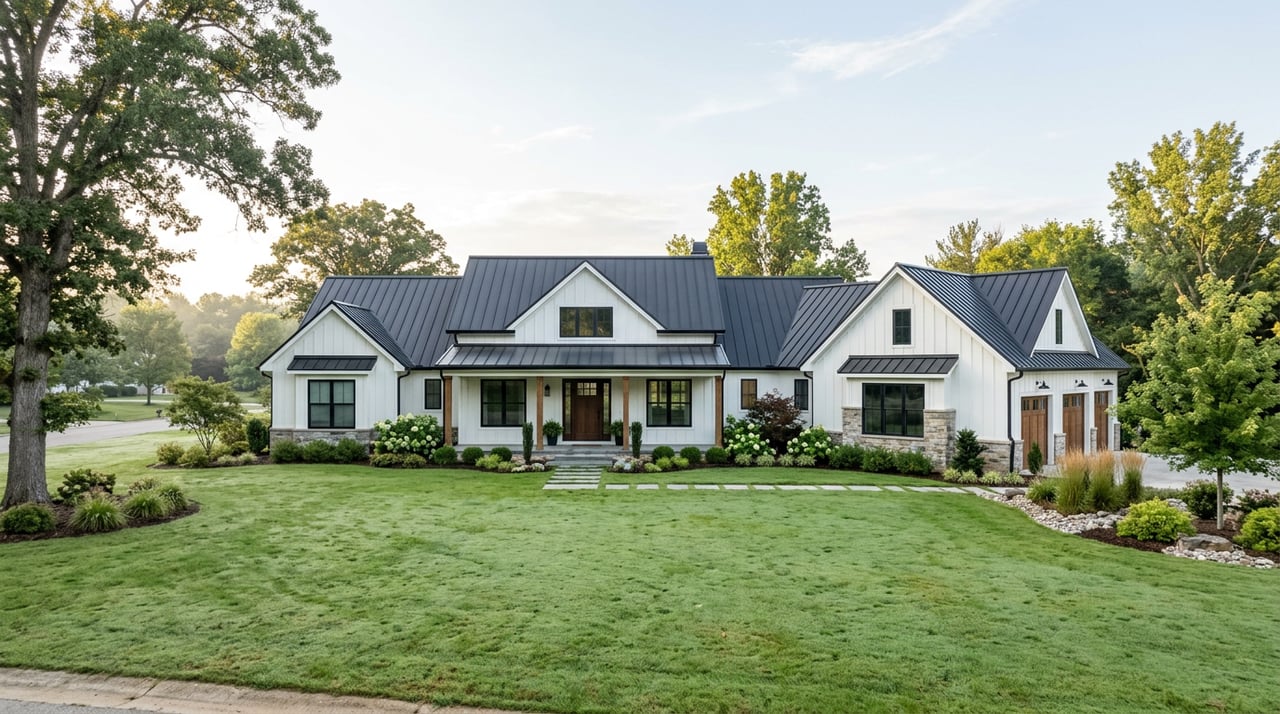
A five-bedroom home on Buckboard Lane in Audie Murphy Ranch went on the market this year carrying two banners across the top of its listing: a rate-buydown credit, and one full year of HOA fees paid by the seller. Neither of those lines changes the sticker price. Both of them changed what the home actually costs to own for the first twelve months.
That detail can be easy to miss when buyers focus on the list price. If you're comparing two homes in Menifee, especially in different neighborhoods, the list price is only one part of the comparison. What the seller is willing to cover and what the HOA fee funds can also affect the cost of ownership.
Why a Price Cut and an Incentive Aren't the Same Thing
A price cut and an incentive affect a listing in different ways. A price cut lowers the asking price; the eventual sale price may become a comparable sale. A rate-buydown credit or a year of paid HOA dues can reduce the buyer's out-of-pocket costs without changing the home's stated price.
This is standard mortgage mechanics, not a Menifee quirk. As Kiplinger has explained, mortgage rate buydowns and closing cost credits let builders and sellers advertise a lower monthly payment without officially reducing the home's base price, and may also help buyers qualify. The Buckboard Lane listing offers a local example of a seller covering some early carrying costs without changing the sticker price.
Which means the question you should be asking isn't "what's the list price." It's "what would this house cost me without the incentive, and does the neighborhood's normal monthly bill make that math better or worse."
The HOA Number Nobody Lines Up Side by Side
Menifee's neighborhoods don't share one housing product. They share a zip code and very little else when it comes to monthly carrying cost. Here's how four of the more commonly compared communities stack up on HOA dues alone:
| Community | Typical HOA | Home Profile |
|---|---|---|
| Audie Murphy Ranch (including Horseshoe Ridge) | About $115 a month | Mostly built in the last decade, planned-community layout, parks and walking trails |
| Traditions at Heritage Lakes | About $80 a month | Established streets, lake-adjacent walking paths, calmer pace |
| Menifee Lakes | Often no HOA at all | Mature trees, more traditional lot layout, established feel |
| Quail Valley | Typically no HOA | Older housing stock, larger lots, lower entry price, more updating needed |
Run that table against two homes priced within a few thousand dollars of each other and the comparison stops being simple. A home in Audie Murphy Ranch at $115 a month in dues commits a buyer to roughly $1,380 a year; a similarly priced Quail Valley home typically has no HOA dues. Over a seven-year hold, that's close to $10,000 in dues alone, before either home appreciates a dollar.
None of that makes the HOA a bad deal. It makes it a different deal, one that's easy to miss if you're only glancing at price per square foot.
What Each Fee Structure Is Actually Funding
The dues aren't a fee for the sake of a fee. In Audie Murphy Ranch, that $115 a month is largely what keeps the parks, trails, and common areas maintained in a community where nearly every home was built within the same recent stretch of years, and where demand has stayed strong enough that homes there tend to move quickly once listed. You're paying to keep a newer, more manicured environment consistent block to block.
Traditions at Heritage Lakes runs a lighter monthly fee, and the trade shows up in pace rather than polish. It's a calmer, more established pocket of the city, with walking paths that lean toward relaxed rather than resort-style.
Menifee Lakes and Quail Valley often have no HOA dues, though the specifics can vary by home. Menifee Lakes offers an established, tree-lined feel, with many homes having no monthly association bill, which suits buyers who want character and location without a recurring line item. Quail Valley goes further in the other direction, trading polish and newer construction for larger lots and a lower entry price, with the understanding that some of those homes will need updating that a newer HOA community has already handled through its dues.
Neither approach is the right answer for every buyer. The mismatch happens when someone shops purely on list price, lands in an HOA community expecting Quail Valley's monthly bill, or buys in a no-HOA neighborhood expecting Audie Murphy Ranch's level of common-area upkeep.
What the Portal Number Actually Tells You
If you've been checking Menifee's median price online, you've probably noticed it doesn't sit still, and not just because the market moves. Different sources are measuring different things. Estimates for August 2026 put Menifee's median list price near $597,000, while sold-price figures for the three months ending in May 2026 ran closer to $569,000. One report put days on market near twelve weeks, while homes across most 2026 readings still closed near 99 percent of list price.
That spread is the point. There isn't one clean number that tells you what Menifee costs right now. There's a market where homes are taking longer to sell than they did during the tightest years of the run-up, sellers are still getting close to their asking price when a home is priced right, and listings like Buckboard Lane may offer a year of dues or a rate buydown rather than a price reduction.
For a buyer, that's useful information. It means there's more room to ask for something on a home that's been sitting, even if the seller won't move on price. The right ask might not be a lower number on the contract. It might be a year of dues, a point or two off the rate, or a closing cost credit, depending on the seller and your loan terms.
Questions to Ask Before You Compare Two Menifee Listings
- Is the incentive temporary or permanent? A one-year HOA payment or a 2-1 rate buydown solves this year's budget, not next year's.
- What happens to the payment once the incentive expires? Ask for the full note rate and the full HOA line item, not just the discounted year one.
- Does the HOA fee include anything beyond common areas, such as front yard maintenance or trash service? That changes what the fee is actually replacing out of your own budget.
- Would the seller consider a straight price adjustment instead of the incentive, and does that change your total cost over the time you plan to own the home?
- How long has this specific listing been on the market, and does that line up with what similar homes in the same community are doing?
Answering these before you write an offer is what turns two listings with similar price tags into an actual comparison, rather than a coin flip based on which one you toured first.
A Couple of Direct Questions
Does a seller-paid incentive affect my loan approval? It can, depending on how it's structured and your loan type. A rate buydown or closing cost credit typically has to fall within limits set by your loan program, so it's worth confirming with your lender exactly how the specific credit on a listing you like will be applied before you assume it lowers your total cost the way the flyer implies.
Is a no-HOA home always the cheaper choice long term? Not necessarily. A no-HOA home skips the monthly bill, but it also means you're personally responsible for whatever an association would otherwise maintain, and there's no shared reserve fund for larger community repairs. The right answer depends on how much you value predictable shared upkeep versus lower fixed monthly costs.
If you're weighing two Menifee neighborhoods, or trying to figure out what a specific incentive on a listing actually means for your monthly payment, I'd rather walk through the real numbers with you than let a portal's median price make the decision for you. Erin Archibek Mills has been reading Menifee's market, community by community, since 2005. Let's Connect.
This article is general information, not legal, tax or financial advice. Consult a qualified professional about your situation.