If you have ever wondered whether acreage living in Menifee means peaceful space, daily chores, or a little of both, the honest answer is yes. Buying land here can open the door to horses, hobby farming, extra privacy, and room to spread out, but it also comes with real planning and upkeep. When you understand how Menifee’s rural areas are designed and what ownership really involves, you can choose a property that fits your lifestyle instead of just looking good online. Let’s dive in.
Menifee acreage starts with zoning
In Menifee, acreage living is not just about having a larger backyard. The city’s planning documents treat rural living as its own lifestyle, with land set aside for agricultural, equestrian, and estate-style use. That means the feel of these areas is intentionally less urban, with larger setbacks, more open space, and more physical separation from denser development.
This matters because two properties with similar acreage can function very differently depending on the zoning. Menifee’s rural zones range from half-acre rural residential parcels to 10-acre agricultural and rural mountainous parcels. The zoning often shapes what you can do with animals, outbuildings, agriculture, and the overall use of the land.
Common rural lot types in Menifee
Here are the acreage patterns buyers will most often come across in Menifee:
- AG: Agricultural land, generally allowing one detached residence per 10 acres
- RM: Rural Mountainous, with a 10-acre minimum and standards tied to steeper terrain and more limited usability in some areas
- RR5: Rural Residential with a 5-acre minimum, where detached homes, animal keeping, and agricultural uses are expected
- RR2: Rural Residential with a 2-acre minimum, often a practical fit for hobby-farm or horse-property buyers
- RR1: Rural Residential with a 1-acre minimum, also supportive of limited agriculture, equestrian use, and animal keeping
- RR1/2: Rural Residential with a half-acre minimum, still allowing limited agriculture and animal keeping, though the city discourages intensive animal keeping at that size
Menifee also requires a significant amount of open-space coverage in these zones, ranging from 40% to 75% depending on the district. In plain terms, that helps preserve the spacious, open feel many buyers want when they start looking for acreage.
What daily life on acreage feels like
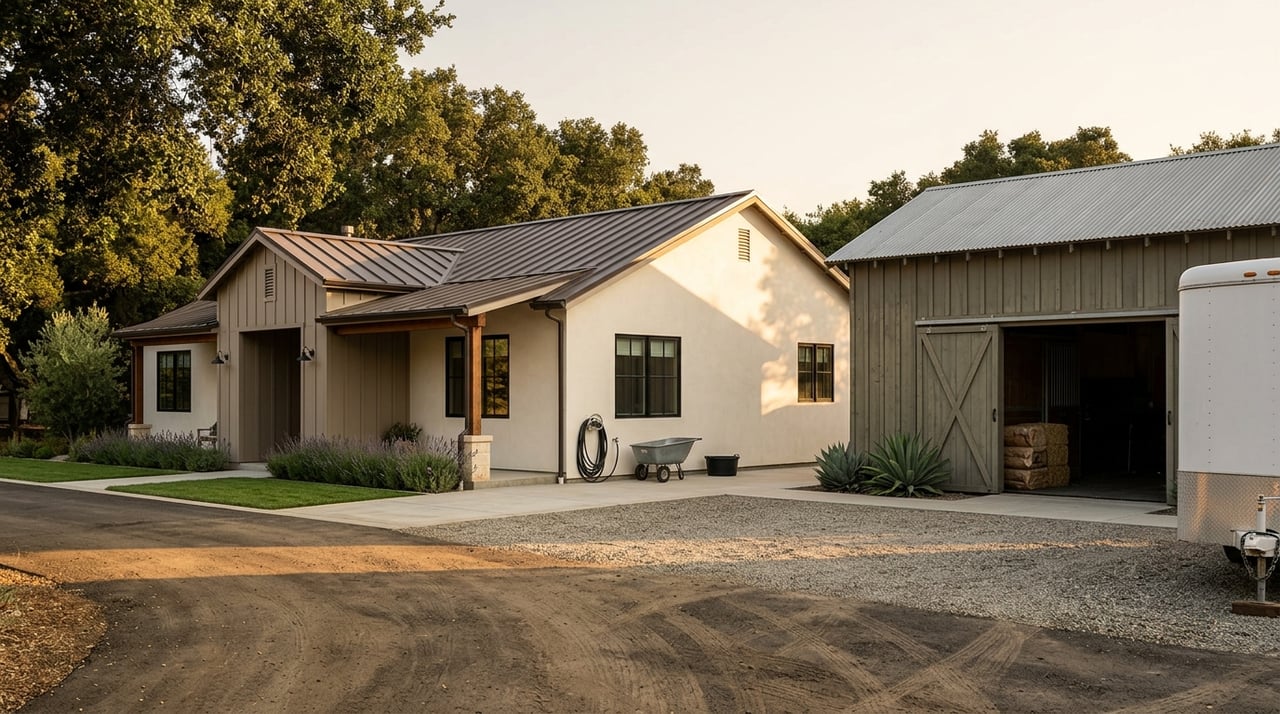
Acreage living in Menifee usually feels more hands-on than life in a typical suburban tract neighborhood. If you want horses, a hobby farm setup, or simply extra room for equipment, trailers, or outdoor projects, that added flexibility often comes with more day-to-day responsibility. You are not just maintaining a house. You are managing land.
On many rural properties, regular tasks can include feeding animals, checking fencing and gates, watering turnout or landscaped areas, moving equipment, and keeping driveways, barns, corrals, and open ground in good order. Even if you do not plan to use the full parcel right away, you still need to think about how the land will be maintained.
Uses that make acreage appealing
One reason buyers are drawn to Menifee is that the city’s rural zones explicitly support uses that are harder to find in standard residential neighborhoods. Depending on the specific zone, uses may include limited agriculture, equestrian activity, animal keeping, farms, apiaries, nurseries, vineyards, wineries, and in some districts even stable or large-animal boarding-related uses.
That creates real flexibility for buyers who want more than a standard house-and-yard setup. It can be a strong fit if you want horse facilities, room for a garden or orchard, or simply land that supports a more practical rural lifestyle.
Room for multigenerational living and work
Menifee’s rural zones also allow features that can make acreage property more versatile over time. The city permits ADUs, JADUs, guest houses, home occupations, and home-based businesses in these areas. For some buyers, that means space for multigenerational living, a private office, or a small business setup on the property.
That added flexibility can be a major advantage, especially if you are trying to balance lifestyle goals with long-term functionality. A property that works for you today may also be able to adapt as your needs change.
Why Menifee acreage feels open
Part of Menifee’s appeal is the way rural properties often sit near natural edges instead of deep inside built-out neighborhoods. The city’s open-space and conservation planning identifies habitat types such as grasslands, nonnative grasslands, coastal sage scrub, and wetland, riparian, and woodland areas. As a result, acreage homes can feel scenic and semi-rural even when they remain close enough to city services for daily errands.
That setting is often what buyers respond to first. You may notice wider views, more breathing room, and a quieter visual environment than you would get in a newer tract-home community. It is a different rhythm, and for the right buyer, that is exactly the point.
The practical tradeoffs to plan for
The dream of acreage usually gets buyers excited about barns, gardens, and open space. The practical side shows up in utilities, fire preparedness, maintenance, and land usability. These are not negatives, but they are important to understand before you commit.
Water and wastewater deserve a close look
In Menifee, utility planning can be a major part of evaluating an acreage property. EMWD provides drinking water, wastewater, and recycled water service in Menifee, but Riverside County notes that a home may also be served by a domestic well or by a water system. Wastewater may be handled through sewer or septic.
If a property uses septic, Riverside County Environmental Health requires permits for installation, repair, or modification, and new systems require county review before construction begins. That means you will want clear answers about the current setup, the system’s status, and whether it supports the way you plan to use the property.
EMWD also notes that water budgets are personalized and tiered rates are designed to reward efficient use. On a larger parcel, that matters. If you plan to irrigate landscaping, maintain turnout areas, or support agricultural use, your water setup should match your needs.
Fire planning is part of ownership
Wildfire planning is another key part of acreage living in Menifee. The city contracts with Cal Fire and Riverside County Fire for fire protection, and local fire-hazard zones are based on terrain, vegetation, fuel, fire history, climate, and weather patterns. Larger parcels often mean more responsibility for brush management and defensible space.
Menifee also states that when a property in a high or very high fire-hazard zone is sold, defensible-space inspection documentation is required. New construction in those zones must also meet wildland-urban-interface requirements. On a practical level, that means you should think beyond the house itself and understand how the land around it must be maintained.
Bigger acreage does not always mean more usable land
This is one of the biggest misconceptions buyers have. A larger parcel can sound ideal, but not every acre is equally usable. Menifee’s Rural Mountainous areas are specifically tied to steep-slope terrain, so a property may offer great views and privacy while still limiting where you can place paddocks, barns, driveways, or open yard space.
That is why land usability matters just as much as lot size. Before you fall in love with the number of acres, make sure you understand how much of the property actually supports your goals.
What to verify before buying acreage in Menifee
Before you move forward on an acreage property, it helps to verify a few basics early. This can save you time, stress, and expensive surprises later.
Acreage buyer checklist
- Water source and pressure: Confirm whether the property is served by EMWD or by a well, and whether the available water setup fits your irrigation or animal-care plans.
- Wastewater system: Verify whether the home is on sewer or septic. If it is septic, confirm the system is permitted and appropriate for the current or intended use.
- Fire-zone status: Check whether the parcel is in a moderate, high, or very high fire-hazard severity zone and what that means for defensible space and home hardening.
- Usable land area: Look beyond total acreage and understand how slope, terrain, and layout affect real functionality.
- Animal and structure allowances: Confirm which animals, barns, riding facilities, and accessory structures are allowed in that specific zone.
This is where local guidance can make a real difference. A property can look perfect in photos and still fall short once you dig into access, layout, or use restrictions.
Menifee versus Temecula acreage living
Buyers often compare Menifee acreage to nearby Temecula Valley properties, and the difference is useful to understand. Both markets can offer land, views, and a rural setting, but the lifestyle focus is not exactly the same.
Temecula’s planning framework includes rural residential and vineyard or agriculture categories, and some of its rural areas are geared toward vineyard operations and agritourism-style uses. Its land-use planning also supports some related non-residential buildings needed for vineyard or agricultural operations.
Menifee, by contrast, is more directly framed around agricultural, equestrian, estate, and large-animal uses. For many buyers, that means Menifee feels more like practical horse and hobby-farm country, while Temecula often reads more like vineyard country with a rural lifestyle component.
Neither is better across the board. It comes down to how you want to live and what you need the land to do for you.
Why local acreage experience matters
When you are buying or selling acreage, the details matter more than they do in a standard neighborhood sale. Zoning, utility setup, fire-zone status, slope, animal allowances, and overall land usability can all shape value and day-to-day function. That is why specialized local knowledge is so important.
With deep Menifee Valley roots and years of experience helping clients with acreage, rural, and equestrian properties, Erin Archibek Mills brings the kind of practical perspective that can help you look beyond the listing photos. If you are thinking about buying or selling acreage in Menifee, Erin Archibek Mills can help you evaluate the land, the lifestyle fit, and the next steps with confidence.
FAQs
What does acreage living in Menifee usually mean?
- It usually means a more rural lifestyle with larger lots, more open space, and potential for agricultural, equestrian, or animal-keeping uses depending on the property’s zoning.
What Menifee zoning is most common for horse or hobby-farm buyers?
- RR2 and RR1 are often practical fits for buyers who want acreage with room for limited agriculture, equestrian use, and animal keeping without needing a full ranch-scale parcel.
What should you check first on a Menifee acreage property?
- You should first verify zoning, water source, wastewater setup, fire-zone status, usable land area, and what animals or accessory structures are allowed on the parcel.
What utility issues matter most for Menifee acreage homes?
- The biggest issues are whether the property uses EMWD service or a well, whether wastewater is handled by sewer or septic, and whether the utility setup supports your intended property use.
What wildfire rules can affect a Menifee acreage purchase?
- Fire-hazard severity zones can affect defensible-space requirements, inspection documentation during a sale, and building standards for new construction in high-risk areas.
What makes Menifee acreage different from Temecula acreage?
- Menifee is generally more focused on practical equestrian, agricultural, estate, and large-animal uses, while Temecula often has a stronger vineyard and agritourism character in its rural areas.